
Kathmandu Valley
Stays in Patan Durbar Square
Heritage Newari courtyard stays beside Patan Durbar Square — woodcarving workshops and brick lanes on the doorstep.
Why Patan Durbar Square
Patan Durbar Square is the best preserved of the valley's three royal squares — a tight assemblage of Krishna Mandir, the Patan Museum (one of the finest small museums in South Asia), and centuries-old Newari courtyard houses around Mangal Bazaar. Stays in this quarter are walks-out-the-door immersive: the Mahabouddha Temple's terracotta plaque-work is one street away, Yampi Bahal monastery and a half-dozen still-functioning artisan courtyards are within 5 minutes. The neighbourhood is car-restricted; vehicles drop off at the edges and you walk in. Apartments here are mostly conversions of Newari brick-and-tile houses, with internal courtyards and carved-wood window screens. The character premium is real — these are the most photographed stays in the valley.
- Stay inside a UNESCO World Heritage core
- Working Newari woodcarving and metalwork courtyards
- Patan Museum — finest small museum in South Asia
- Walks to Mahabouddha Temple, Yampi Bahal, Krishna Mandir
- Most photogenic apartment stays in the valley
- 20 min by taxi to Bungmati & Khokana working craft villages
Apartments
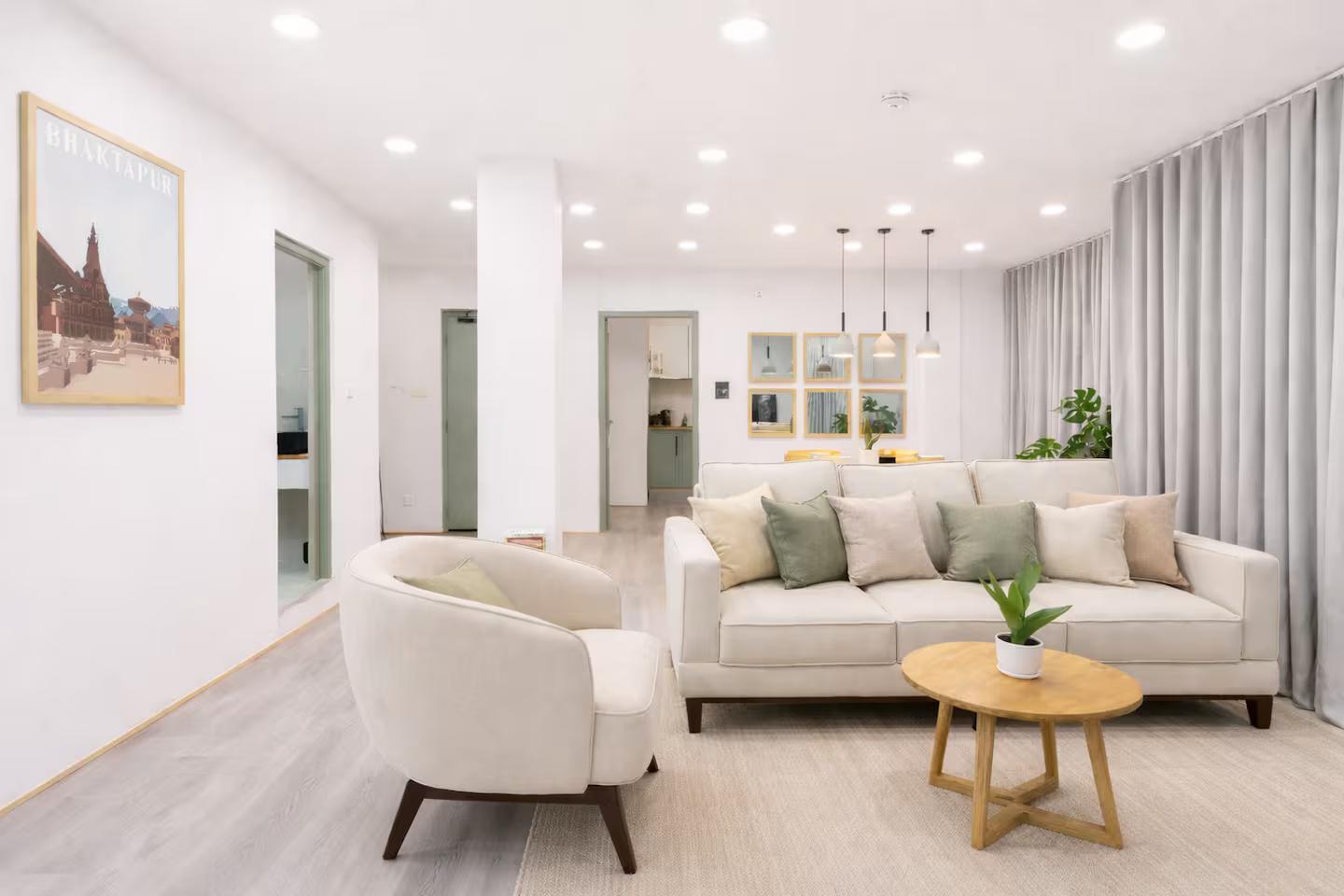
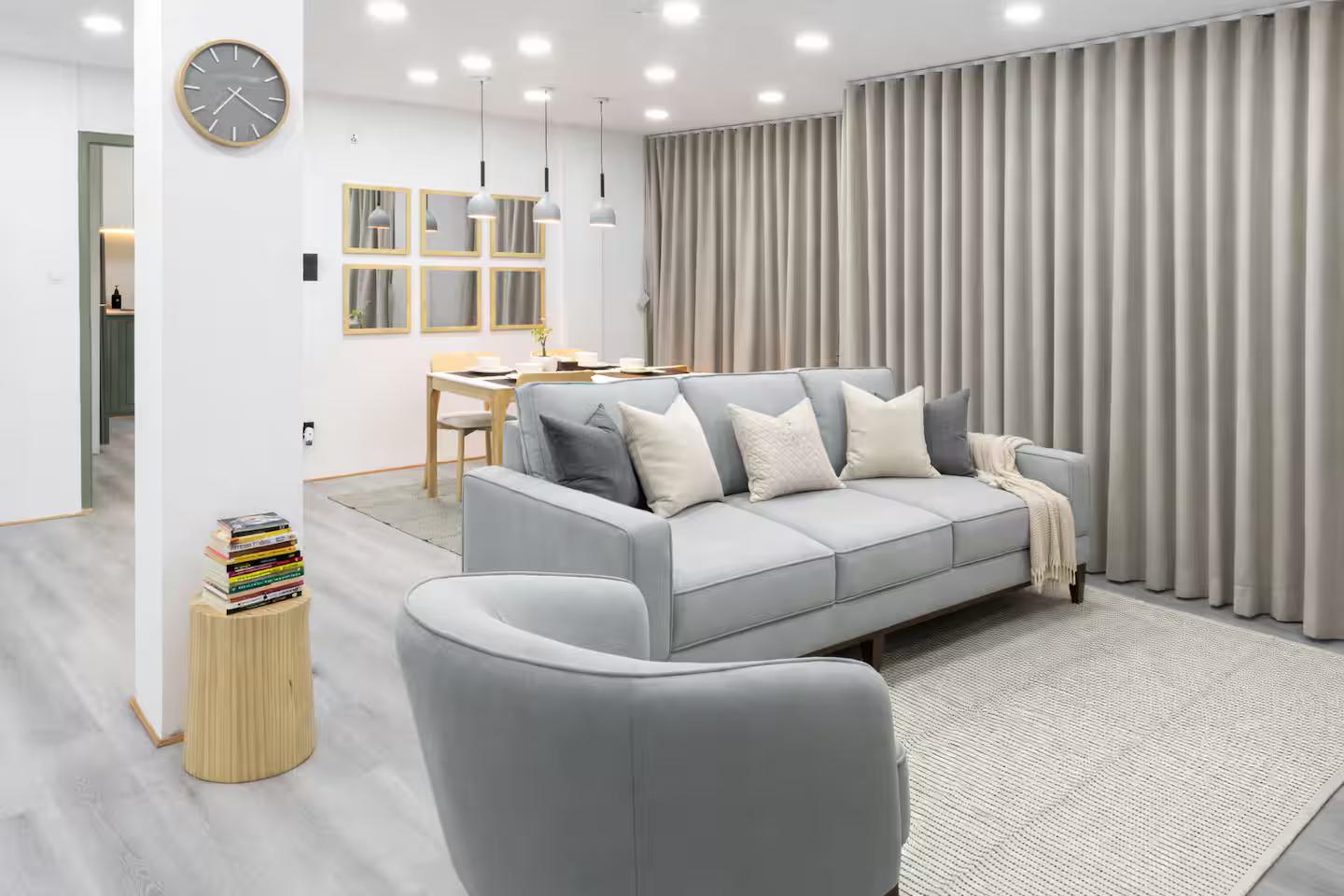
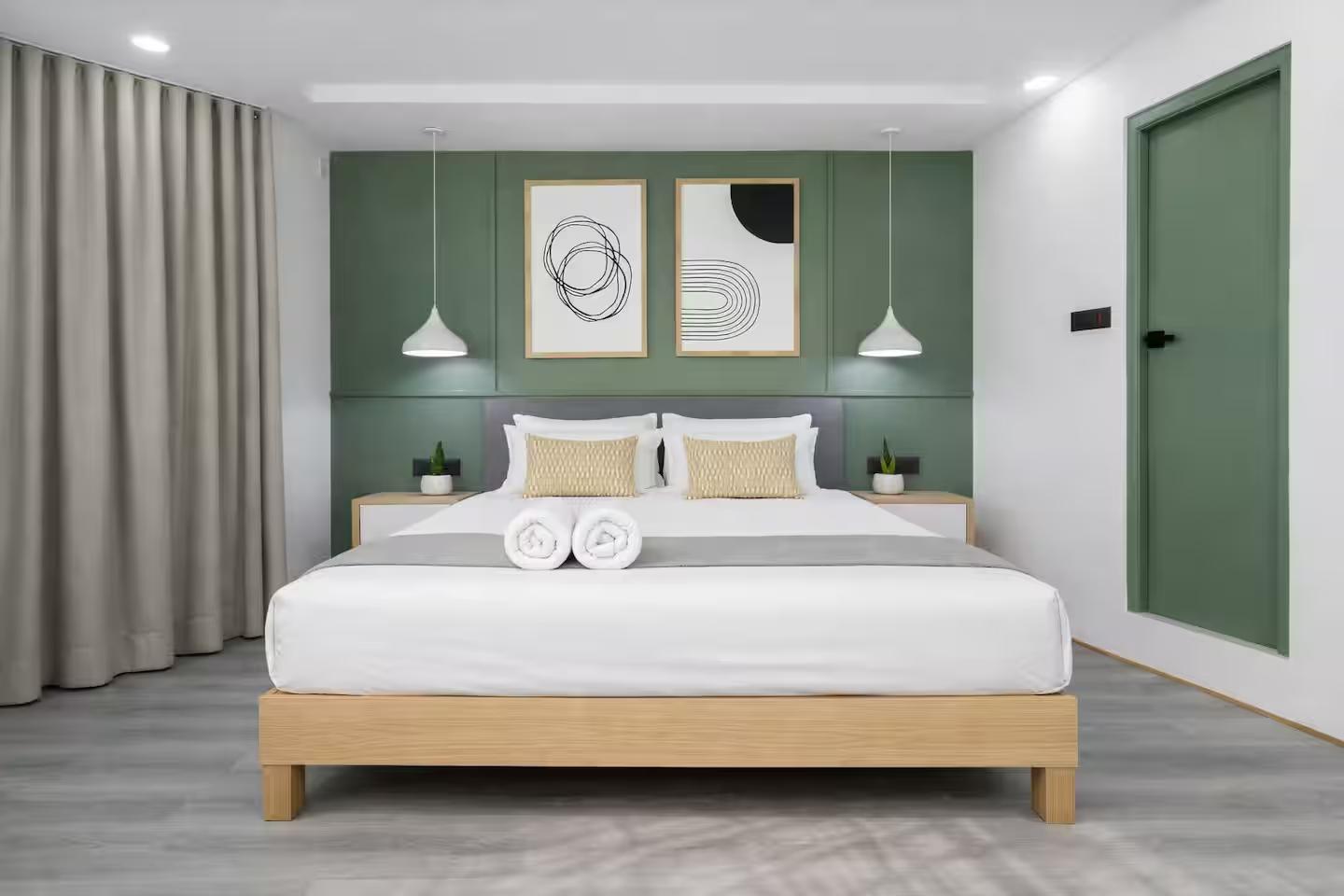
Available Apartments Nearby
The Patan Durbar Square Guide
Patan Durbar Square in one line: the best-preserved and most lived-in of the Kathmandu Valley's three royal squares — Newari craft workshops, the finest small museum in South Asia, and centuries-old courtyards you can stay inside.
Patan (Lalitpur) Durbar Square is the heart of the Newar craft tradition. The central square assembles Krishna Mandir (a 17th-century stone shikhara temple, the most photographed in the valley), the Royal Palace of Patan (now home to the Patan Museum), and the Sundari Chowk courtyard with its sunken Tusha Hiti bathing tank carved from a single block of stone. Walk one street north of the square and you're among the working metal and bronze courtyards of Mahabouddha; one street south and you're in the brick lanes around Bungmati Road that still run as residential Newar neighbourhoods, not tourist sets.
The Patan Museum. The single best small museum in South Asia. The collection — religious bronze and copperware, dating mostly 12th-18th century — is small enough to absorb in 90 minutes and beautifully presented in the renovated rooms of the old palace. Café Du Temple inside the museum is the recommended quiet lunch spot in the heritage zone.
The craft economy is still active. Within a 10-minute walk you can watch repoussé metalwork (the temple-fitting craft Patan is known for), lost-wax bronze casting at Mahabouddha-area courtyards, thangka painting in the artisan houses west of the square, and woodcarving workshops producing window screens for monasteries from Bhutan to Mongolia. Many of these courtyards welcome respectful visitors. The Patan Industrial Estate galleries on Kupondole let you see the export side of the supply chain.
Where to stay. Apartments inside Mangal Bazaar — the immediate inner ring around Durbar Square — are typically conversions of Newar brick-and-tile houses, with internal courtyards, carved-wood window screens (jhya), and rooftop access. These are the most photographed apartment stays in the valley and pay a real character premium. For a slightly quieter base, the Patan Industrial Estate side toward Kupondole has more conventional serviced apartments with full amenities at lower rates.
Day trip — Bungmati and Khokana. Two working Newar villages 4 km south of Patan that are still producing pottery, woodcarving and mustard oil pressing as primary livelihoods. The Khokana mustard oil mill is one of the most atmospheric small industrial sites you'll see anywhere. Easy half-day cycle or 20-minute taxi.
Connectivity. Thamel is 15 minutes by taxi via the Kupondole bridge; the airport is 25-30 minutes. The heritage zone itself is car-restricted — vehicles drop off at the edges and you walk in.
One thing to know. The immediate inner courtyards have dawn temple bells at 5:30am — beautiful but real. Pick an apartment 2-3 lanes back from the square if you're sensitive to early sound.
Distances You'll Actually Want
- Patan Durbar Square (UNESCO)0 m0 mininner-ring apartments
- Patan Museum100 m2 min
- Krishna Mandir50 m1 min
- Mahabouddha Temple350 m5 min
- Patan Hospital1.5 km18 min5 min
- Jhamsikhel café strip1.8 km22 min6 min
- Bungmati & Khokana villages4.5 km20 min
- Thamel6.0 km18 min
- Tribhuvan International Airport (KTM)9.5 km28 min
- Boudhanath Stupa11.0 km35 min
Best for cultural & architectural travellers
Nowhere else in the valley puts you inside a UNESCO heritage core with the daily rhythm of a working Newar neighbourhood. Walks to Mahabouddha, Yampi Bahal, Krishna Mandir, and the Patan Museum start at your front door. Pair with a 2-3 day Bhaktapur side trip and you've covered the architectural backbone of the valley.
Best for craft tourists & buyers
Functioning metal, bronze, thangka, and woodcarving workshops within a 10-minute walk — many of which welcome respectful visitors and most of which sell directly. The Patan Industrial Estate galleries on Kupondole let you see the export side. For serious buyers, plan a half-day with a local guide to access the smaller family workshops outside the tourist circuit.
Best for photographers
Most photographed apartment stays in the Kathmandu Valley — internal courtyards, carved-wood jhya window screens, and rooftop access overlooking Durbar Square. Best light is dawn (5:30-7am, golden on the brick) and dusk; the inner courtyards stay in shade most of midday.
Nearby Landmarks
- Patan Durbar Square (UNESCO)
- Patan Museum
- Krishna Mandir
- Mahabouddha Temple
- Yampi Bahal
- Sundari Chowk (Tusha Hiti)
- Bungmati and Khokana (4 km)
Who Stays Here
Cultural and architectural travellers, craft tourists, photographers
FAQ
Frequently Asked
Can I walk into Patan Durbar Square from my apartment?▾
Is there an entry fee for Patan Durbar Square?▾
How does it compare to Bhaktapur Durbar Square?▾
Are the dawn temple bells loud?▾
Is the museum worth visiting?▾
How far to Bungmati and Khokana?▾
How far is the airport?▾
Nearby Neighbourhoods in Patan (Lalitpur)
Or Look Further Afield
Ready to Book in Patan Durbar Square?
Browse every available apartment on the all apartments page, or read the full Booking Process walkthrough.