
Tiny Living journal
Sleeping in a 100-Year-Old Newari Heritage Homestay in Patan: A Lived-In Review
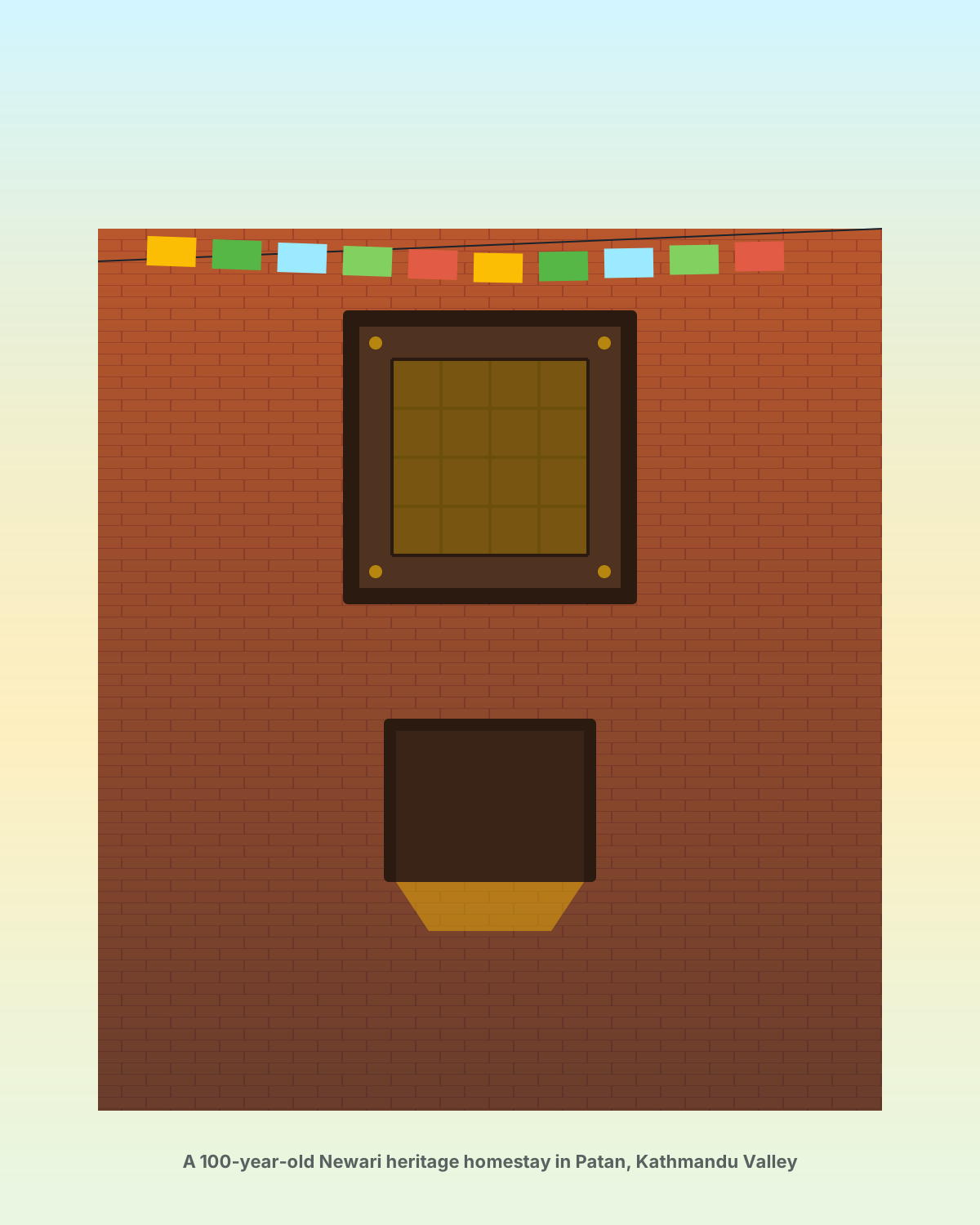
A 100-year-old Newari heritage homestay in Patan — what it is actually like to swap Thamel for low timber doorways, top-floor kitchens, family-cooked breakfasts and the quiet rhythm of a brick-paved gali.
There is a specific physical memory that stays with you long after you leave Patan: the gentle, involuntary habit of ducking your head every time you walk through a doorway.
If you are over six feet tall, this habit is not just a quirk — it is a survival mechanism.
When I first stayed at the Traditional Newari Homestay in the historic core of Patan, Lalitpur, I spent my first two hours underestimating the low timber doorframes. By day three, my neck had adapted, and I had fallen completely in love with the rhythm of living in a house built in 1925.
If you are looking for a standard hotel room with sterile white walls, carpeted hallways, and a generic continental buffet, this is not the place for you. But if you want to experience the quiet, artisan-driven soul of the Kathmandu Valley, there is no better way to live than inside a restored piece of Newari history.
Here is what it is actually like to swap the tourist bustle of Thamel for a family-run heritage home in Patan.
First Impressions: Crossing the Threshold of 1925
To find the homestay, you have to leave the main roads behind and navigate a maze of narrow, brick-paved alleys (galis) just a ten-minute walk from Patan Durbar Square. The transition is immediate. The roar of Kathmandu's traffic fades, replaced by the rhythmic clinking of brass carvers hammering metal in nearby courtyards and the smell of roasting mustard oil and spices drifting from open windows.
The building itself is a beautiful example of traditional Newari architecture, featuring deep-red exposed bricks (appa), thick mud-mortar walls that naturally insulate the rooms, and dark, hand-carved wooden windows (Aakhi Jhyal).
When I arrived, the host, Dinesh, met me at the door with a warm smile, a red tika pressed onto my forehead, and a vibrant flower necklace (mala).
Dinesh is the kind of host who makes you feel like an old friend returning home rather than a paying customer. His English is excellent, and his deep knowledge of Patan's history, local customs, and hidden shrines is invaluable for anyone wanting to explore the city with intention.
Room Tour: Cozy Earthiness and Low Ceilings
The homestay offers only a couple of guest rooms, ensuring the experience remains intimate and personal rather than commercial.
My room was clean, rustic, and incredibly grounding. The floor was made of local hardwood, the walls were exposed brick, and the furniture was kept simple: a comfortable double bed, a wooden wardrobe, an electric kettle, and a small writing desk.
Because old brick-and-mud houses can get damp and chilly during the winter months, the inclusion of a small electric fireplace in the room was an absolute blessing. It quickly took the bite out of the morning air before the sun reached the courtyard.
The Height Reality Check
Let's address the elephant in the room: the ceiling height.
Traditional Newari homes were designed for a different era and a demographic that was generally shorter. The doorways are intentionally low — often under 5'8" (1.7 m) — and the ceilings in some of the rooms can feel tight if you are tall.
If you are close to six feet (1.8 m) or taller, you will have to duck.
My travel partner, who stands at 6'2", had to be highly mindful of his head every time he stood up.
However, rather than being a drawback, this is exactly what makes the stay so special. You are not staying in a generic, modern concrete block; you are living inside a preserved architectural relic. It is an authentic, lived-in slice of "Real Nepal" that money simply cannot buy in a commercial hotel.
Kitchen and Dining: The Heart of the House
In traditional Newari homes, the kitchen is always located on the top floor to keep street dust away from the food and allow cooking smoke to escape easily through the roof.
Every morning, I woke up to the sound of local roosters and the rich, sweet aroma of spiced milk tea bubbling on the stove.
Dinesh and his family prepare and serve breakfast at a large communal wooden table on this top floor.
The breakfasts were outstanding: fresh pancakes, homemade potato curry, eggs cooked to order, and endless cups of hot milk tea.
But the highlight of breakfast wasn't just the food — it was the conversation. Dinesh and his family would sit with us, sharing stories about local festivals like the vibrant Indra Jatra, discussing family dynamics, and offering highly personalized tips for navigating the valley.
These morning chats provided a beautiful cultural connection that gave our entire trip a deeper sense of meaning.
Modern Comforts in an Ancient Space
Many travelers worry that choosing a century-old homestay means sacrificing basic comforts, but Dinesh has balanced heritage preservation with modern necessities beautifully:
- Hot water. The house is equipped with a reliable electric geyser system, ensuring hot showers are always available, even on cloudy winter mornings when solar panels alone struggle.
- Connectivity. The Wi-Fi is fast and reliable throughout the property, which was a pleasant surprise given the thick, traditional brick-and-mud walls.
- The shared lounge & sun terrace. There is a lovely communal lounge and a sunny rooftop terrace where you can read a book, chat with fellow travelers, or enjoy a quiet moment looking out over the neighborhood rooftops.
Lived-In Perspective: Is It Right for You?
Choose this homestay if:
- You want deep cultural immersion — you'll live alongside a local family, eat traditional food, and experience authentic Newari hospitality first-hand.
- You prioritize a quiet, peaceful neighborhood — tucked inside a residential courtyard, the home is a peaceful sanctuary away from the tourist crowds.
- You want to support sustainable tourism — your stay directly supports a local family and helps preserve Patan's architectural heritage.
Skip this homestay if:
- You cannot navigate steep, narrow stairs. Heritage homes feature narrow, steep wooden stairs that require careful stepping.
- You are very tall and easily frustrated by low ceilings. If you do not want to duck through doors continuously, the low clearances might get tiresome.
- You require absolute room-service luxury. For 24/7 concierge, gym, and formal room service, a boutique hotel in Jhamsikhel or Lazimpat is a better option.
Practical Guide for Your Stay
- Budget & value. Rooms typically range from NPR 2,000 to NPR 4,500 per night (about USD 15 – 34) depending on the season, including a freshly prepared breakfast. Exceptional value compared to nearby commercial heritage hotels.
- What to pack. Bring a comfortable pair of slip-on shoes or sandals — it is customary to remove your footwear before entering the house or kitchen areas. A headlamp or phone light helps for navigating the dark wooden staircases at night.
- Getting around. Patan Durbar Square, the Golden Temple, and the Patan Museum are all within an easy ten-minute walk. Taxis are easily available on the main roads, but downloading Pathao makes getting over the river into central Kathmandu simple and affordable.
Staying at Dinesh's traditional home was more than just finding a cheap place to sleep — it was an experience that fundamentally shifted how I traveled through the valley.
It taught me that true travel isn't about collecting postcard views from a distance; it is about slow mornings, sharing hot tea on straw mats, and feeling completely at home in the house of a stranger.
<!-- tla:related-reading -->