
Tiny Living journal
Wake Up to the Himalayas: A Lived-In Guide to Kathmandu’s Best Mountain-View Airbnbs and Apartments
Why the right floor, the right neighbourhood and the right backup utilities decide whether you wake up to snow-capped Langtang views or your neighbour’s concrete wall — plus a lived-in shortlist (Raniban / Boudha / Patan) and the seasonal visibility window to book around.
There is a rare, quiet magic to a Kathmandu morning that most travellers completely miss. If you base yourself on a lower floor in a congested commercial alleyway, your day begins with the rumble of water tankers, the sharp smell of diesel exhaust, and a view of your neighbour's concrete wall. But if you position yourself with intention — elevated on a higher floor in the right residential pocket — your morning starts with a cold, crisp breeze, the distant ringing of temple bells, and the jaw-dropping sight of the snow-capped Himalayas catching the first pink rays of the sun.
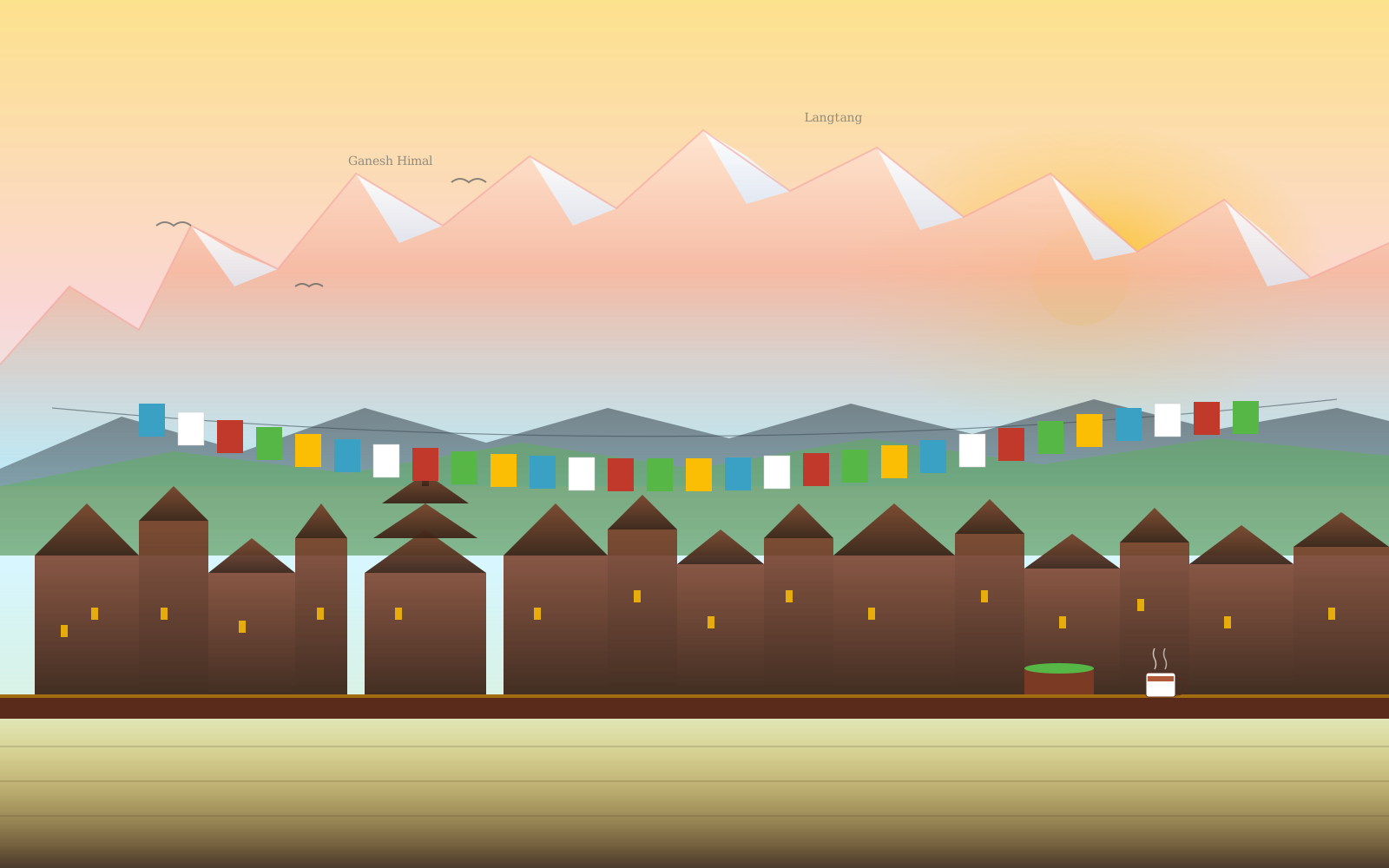
On a clear morning, the Langtang range, Ganesh Himal, and the Jugal Himal look so close you feel as though you could reach out and touch them. But securing these iconic views from your private balcony or rooftop terrace requires more than just picking a listing with a pretty photo.
In a valley known for rapid urban growth, seasonal visibility shifts, and localised dust, finding a true mountain-view sanctuary requires an insider's blueprint. Here is a lived-in guide to the best view-focused neighbourhoods, the top-performing apartments, and the technical secrets to waking up to the Himalayas in Kathmandu.
The Science of a Clear View: Smog, Seasons, and the "Dust Line"
Before booking a penthouse or balcony studio, you need to understand the atmospheric realities of the Kathmandu Valley. Mountain views are not guaranteed year-round, and local weather patterns split the year into three very different visibility windows.
Autumn (October to November) is the headline season. Skies are crystal clear, the Himalayas reveal their peaks in high contrast, and your balcony catches that famous golden hour glow as the snow caps light up at sunrise.
Winter (December to February) wraps the valley in thick morning fog that doesn't lift until late morning. Balconies are cold, horizons clear late, and the patient guest is rewarded with razor-sharp views once the mist burns off.
Spring (March to May) trades clarity for warmth. Midday dust haze settles over the bowl-shaped valley, horizons soften, and sunsets turn dramatic with peach and rose tones — until a pre-monsoon thunderstorm rinses the sky and the peaks suddenly snap back into focus.
The Seasonal Visibility Formula
There is real science behind the seasonal swing. Atmospheric researchers use Koschmieder's classical formulation: visual range is roughly equal to ln(1 ÷ δ) divided by β_ext, where δ is the contrast threshold of the human eye (around 0.02 to 0.05) and β_ext is the atmospheric extinction coefficient. In plain language: the more PM₂.₅ and humidity in the air, the shorter the distance you can see.
During the summer monsoon (June to August), heavy rains wash the atmosphere clean, but thick clouds cover the peaks. In the dry post-monsoon autumn (September to November), the atmospheric extinction coefficient drops to its lowest annual values. This clears the air and extends your visual range past 100 kilometres, allowing you to see the jagged white outlines of the Himalayas clearly from your balcony.
By contrast, the spring months (March to May) bring rising temperatures and agricultural burning, which traps a layer of warm, dusty haze in the bowl-shaped valley, obscuring the mountain horizon until a pre-monsoon storm clears the sky.
The "4th Floor" Rule
Kathmandu's urban air is heavily stratified. Road dust and vehicle emissions form a dense, low-lying blanket that hugs the valley floor. If you stay on the ground, first, or second floors, you are living directly inside this dust layer.
To secure clean air and an unobstructed view, never book a rental below the fourth floor. Being elevated gets you above the street-level dust, clears adjacent rooftops, and positions your balcony perfectly to capture the cool mountain breezes sliding down from the northern ridges.
Neighbourhood Spotlights: Where to Book for the Best Views
Not all neighbourhoods in Kathmandu are created equal when it comes to mountain vistas. Three premier zones — each with its own personality — line up under the Langtang range and pull a different kind of view through your window: the forest edge of Raniban, the stupa basin of Boudha, and the historic rooftops of Patan.
1. The Raniban Ridge: Tranquil Forest Edges
For the absolute cleanest air and most dramatic mountain frames, head northwest toward the forested foothills of the Shivapuri Nagarjun National Park. The elevation here is higher than the valley floor, placing you in a pristine natural micro-market.
- The Standout Property: NEUPANE Homestay. Nestled at the quiet foothills of the national park, this recently renovated apartment is a tranquil, green escape.
- The View Experience: It features a spacious ground-floor layout and private balconies that look out over the ancient Swayambhunath Stupa (the Monkey Temple) and the massive, snow-capped walls of the Himalayas beyond. You can wake up to birdsong, watch the morning mist rise off the forest canopy, and enjoy a quiet meditation on your private terrace.
- The Vibe: It is perfect for writers, slow travellers, and nature lovers who want to be close to hiking trails while remaining within a short taxi ride of central Kathmandu.
2. The Boudha Basin: Stupa Spires and Peak Contours
Boudha offers a stunning combination of spiritual architecture and mountain backdrops. Because the neighbourhood sits on an elevated basin in the north-eastern part of the valley, its rooftop views are exceptional.
- The Standout Property: Serenity Stays. This modern, beautifully designed two-bedroom condo is located directly in front of the Boudhanath Stupa.
- The View Experience: It features large floor-to-ceiling windows and private balconies, letting you watch the daily morning kora begin and see the stupa's golden spire catch the morning sun, with the sharp blue contours of the mountains framing the background.
- The Vibe: Wake up to the low, resonant rumble of monastic horns and spin prayer wheels along the balcony edge, completely immersed in Boudha's unique spiritual rhythm.
3. Historic Patan: Red Bricks and Distant Ridges
If you prefer historic, urban density over forest ridges, Patan (Lalitpur) offers a completely different view aesthetic. Here, the mountains form a dramatic backdrop behind centuries-old Newari temple rooftops.
- The Standout Property: Yamba Traditional Home. Located just a short walk from Patan Durbar Square, this beautifully restored heritage bed-and-breakfast offers a comfortable stay in a traditional Newari home.
- The View Experience: It features a stunning rooftop terrace that looks out over the ancient brick courtyards, stone carvings, and multi-tiered gilded roofs of the old city, with the Langtang Himalayas framing the northern horizon on clear days.
- The Vibe: It is perfect for culture lovers and design enthusiasts who want to step out of their door directly into ancient artisan alleys while enjoying spectacular sunset views.
Technical Checklist for Your View-Focused Stay
To ensure your mountain-view stay is comfortable and hassle-free, always confirm these three technical details with your host before booking. The big two are a dual solar-plus-electric geyser that guarantees hot baths even on cloudy winter mornings, and a battery-based inverter that keeps Wi-Fi, lights and laptop sockets running through scheduled outages so your sunrise time-lapses keep uploading.
1. The Solar Hot Water Trap
Many residential properties in Kathmandu rely strictly on solar water heaters on the roof. While this works wonderfully during the hot summer months, solar panels alone struggle to provide hot water during the cold, cloudy winter mornings. To avoid freezing morning showers, always ask your host: "Does the apartment have a dedicated electric geyser (water heater) in the bathroom in addition to solar panels?" A dual-heating system ensures you can enjoy a hot bath at sunrise, regardless of the weather.
2. Inverter Power Backups
Taking sunrise time-lapses and editing photos requires a reliable power supply. Ensure your apartment features a battery-based solar or hybrid inverter system. These systems are completely silent and will keep your Wi-Fi router, lights, and laptop charging sockets running continuously, even during localised power maintenance outages.
3. Drinking Water Filtration
Because municipal tap water is non-potable, reliable Airbnbs provide a 20-litre blue drinking water jar (jarri) fitted with a dispenser in the kitchen. Tap water is perfectly fine for boiling pasta or washing vegetables, but always use the provided filtered water for drinking and brushing your teeth.
Summary of Top Mountain-View Stays
- NEUPANE Homestay in Raniban (Swayambhu) — green, quiet and forest-edged; mountain-view balconies and an in-unit washing machine.
- Serenity Stays at the Boudha Stupa core — spiritual and monastic with floor-to-ceiling stupa views and fast Wi-Fi for remote work.
- Yamba Traditional Home in historic Patan core — cultural heritage with a rooftop sun terrace that frames both the old city and the Langtang ridge.
- PatanGhar Homestay in the Patan heritage core — traditional and cosy, with balcony and terrace access and a three-minute walk to Patan Durbar Square.
By choosing your neighbourhood strategically, staying on a higher floor to escape the dust line, and verifying your apartment's backup utilities, your stay in Kathmandu will be far more than just a place to sleep — it will be an unforgettable, front-row seat to the majesty of the Himalayas.
<!-- tla:related-reading -->